

Make / Model Search
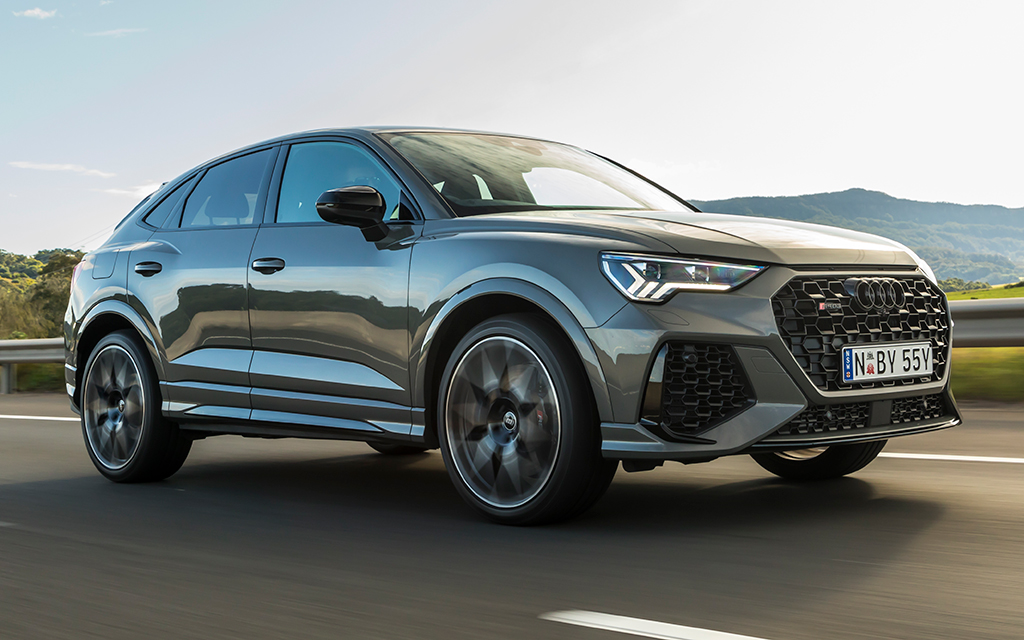
News - Audi - RSHybrid, BEV options on table for next Audi RS 3Audi Sport gears up for the tough task of replacing iconic five-pot RS models28 Apr 2026 By TOM BAKER in FRANKFURT AUDI Sport is weighing a multi-technology replacement strategy for its compact RS models as it considers how to preserve the character of the five-cylinder RS 3 and RS Q3 in a regulatory environment that is narrowing viable future powertrains to plug-in hybrid (PHEV) and battery electric (BEV) options.
The performance division is yet to determine the final technical path for its next compact models, but Audi Sport managing director Rolf Michl confirmed the segment remains central to the RS line-up, and that the five-cylinder engine remains a key part of the discussion.
“The compact segment is definitely one of our core segments, also regarding the viability of RS models – it is basically the entrance into the RS world,” said Mr Michl.
“We were the founder of the high-performance (compact) segment with the RS 3 in 2011, so we are definitely making our thoughts (about how to replace it) … be sure we are fully aware of the importance of this segment, and also about the character.”
The current ‘8Y’ RS 3, which debuted in 2021, will depart the European market in the third quarter of 2027 as Audi has decided not to upgrade the current version of the EA855 evo 2.5-litre turbocharged five-cylinder engine to meet new EU7 emissions regulations.
However, the RS 3 five-cylinder will continue to be made available to Audi Australia, as well as the North American market, into 2028 and potentially 2029.
“The five-cylinder will definitely exist as long as the lifecycle of the base (A3) model runs,” explained Mr Michl.
“It depends on when the A3 will end, but this will definitely be some time after 2027. In the rest of the world, we have really enjoyable sales, so we will keep the (five-cylinder) engine (alive).”
Audi is working on the replacement strategy for the A3, which may involve two distinct models with the same name, with the existing MQB Evo-based A3 receiving a deep facelift to sit alongside new-generation electric A3 models that would utilise the Volkswagen Group’s delayed SSP BEV platform.
Two distinct A3s (and potentially two Q3s) would mirror the multi-powertrain strategy emerging across the premium segment, where manufacturers are hedging their bets in a turbulent market by extending the lifespan of ICE platforms while adding dedicated BEV equivalents.
Rival BMW has utilised this logic for more than 10 years and regards it as a distinct competitive advantage when compared with less coherent BEV strategies hitherto deployed by Audi and Mercedes-Benz.
A multi-powertrain future would give Audi Sport at least two technical bases for future compact RS models.
If the A3 receives a deep facelift, space could be made for a reworked five-cylinder with a PHEV system that would build on learnings from the new RS 5’s sophisticated hybrid hardware.
Another avenue would be to develop a compact BEV RS model based on SSP that could leverage developments in batteries, efficiency, motors and aerodynamics.
“The most important thing is that the RS experience in the compact segment is an authentic one,” said Mr Michl.
“There is no final (decision), but we are absolutely aware of our deeply rooted DNA for the five-cylinder.”
Adding a PHEV system to the inline five would enable Audi Sport to retain an iconic powertrain while stemming its relatively high CO2 emissions.
However, Mr Michl indicated that packaging the engine, 20kWh-plus battery, electric motor and thermal hardware in a small car would be tougher than in the RS 5.
“It would be difficult (to fit the PHEV in), but we are Audi Sport– we achieve the unachievable,” he said, noting that engineers initially saw developing the new RS 5 hybrid as a tough task. A credible power-to-weight ratio, which improved in the RS 5 despite weight gain, is a key internal metric.
The decision process is complicated by Audi Sport declining to engineer market-specific RS powertrains under one badge.
“We want to ensure a truly differentiated RS model in every segment … it wouldn’t make any sense to have a multiple engine strategy. If we build any RS model, it should be the same (worldwide). There will not be an RS for the US with Engine X and for Europe with Engine Y,” said Mr Michl.
Any future compact RS model must be capable of selling across all key global markets, raising the prospect of a PHEV that keeps everybody happy.
In the background, competitive pressure is sharpening. BMW is preparing smaller BEV models on the Neue Klasse platform, including a 1 Series hatchback, while a hotter iX1 derivative could give BMW a zero-emission RS Q3 alternative.  Read more |
Click to shareMotor industry news GoAutoNews is Australia’s number one automotive industry journal covering the latest news, future and new model releases, market trends, industry personnel movements, and international events. |



Connect with us


Facebook Twitter Instagram